
Few dental procedures carry as much fear-inducing reputation as the root canal. Mention it in conversation and you’ll often hear a wince, a story from a relative, or some version of “I’d rather lose the tooth.” Yet most of that reputation is based on outdated experiences, exaggerated stories, or simply confusing the pain of the problem with the pain of the treatment. In reality, modern root canal treatment is designed to relieve pain, not cause it.
If you’re dealing with a persistent toothache and wondering whether a root canal is in your future, here’s what the procedure actually involves and why it has such an unfairly scary reputation.

Inside every tooth, beneath the hard enamel and dentin, sits a soft core called the pulp. The pulp contains nerves and blood vessels that helped the tooth develop. When this inner tissue becomes infected or inflamed, usually from deep decay, a cracked tooth, or repeated dental procedures on the same tooth, it can cause significant pain and, left untreated, can lead to an abscess.
Root canal treatment, part of a field called endodontics, removes this infected pulp tissue, cleans and disinfects the inside of the tooth, then seals it to prevent further infection. The goal is to save the natural tooth rather than remove it entirely.
Not every toothache means you need a root canal. Here’s a general guide to the difference:
You might just need a filling if:
You may need a root canal if:
Only a dentist can confirm which treatment you need, usually with a visual exam and an X-ray, but these signs are a useful starting point for understanding what’s happening before you book an appointment.
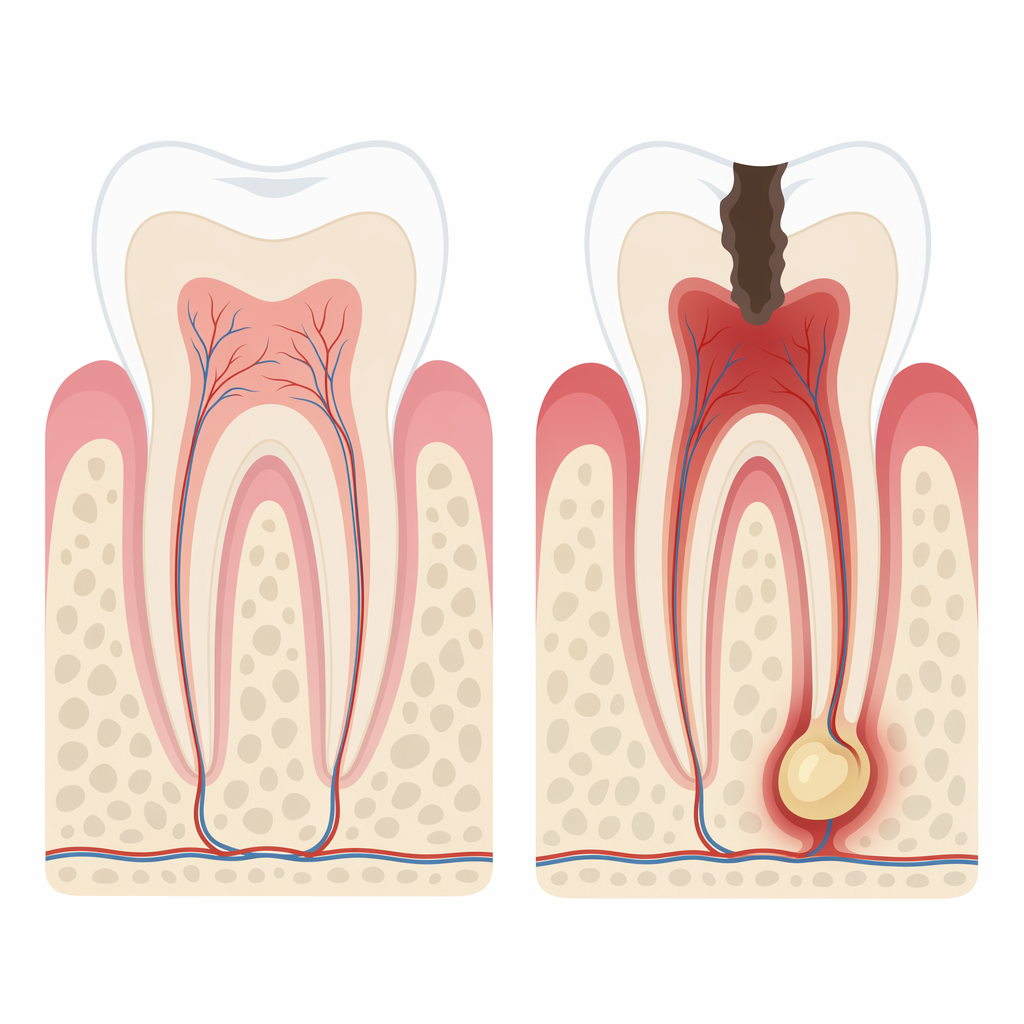
This is the part most people get wrong. The pain associated with root canals almost always comes from the infection itself, before treatment even begins. That throbbing, can’t-sleep, won’t-go-away toothache is the infected pulp putting pressure on surrounding nerve tissue.
The procedure itself is performed under local anaesthesia, the same numbing used for a routine filling. Once the area is numb, most patients describe the experience as similar to having a deep filling done: some pressure and vibration from the dental instruments, but not pain. Modern rotary instruments and imaging have made the process significantly faster and more precise than it was a generation ago, which is a large part of why the “horror story” reputation no longer matches the typical experience.
A root canal typically follows these steps:
Depending on the tooth and complexity of the infection, this can be completed in one visit or split across two appointments.
It’s normal to feel some mild soreness or tenderness in the treated area for a few days afterward, particularly when chewing. This is usually manageable with over-the-counter pain relief and tends to improve quickly. It’s worth noting: this post-treatment soreness is generally much milder than the pain that brought you to the dentist in the first place, since the source of the infection has now been removed.
When faced with a painful tooth, some people consider simply having it pulled out instead of going through treatment to save it. It’s understandable to want the “quickest” fix, but extraction often creates more problems than it solves.
Losing a tooth, even one at the back of the mouth, can lead to:
For this reason, dentists generally treat extraction as a last resort, reserved for teeth that are too damaged or infected to be saved, rather than a routine alternative to root canal treatment.
While most dental pain can wait for a scheduled appointment, certain symptoms need prompt attention: significant facial swelling, fever, difficulty swallowing or breathing, or pain that’s rapidly worsening. These can indicate a spreading infection and should be assessed as soon as possible.
The longer an infected tooth goes untreated, the more likely the pain is to worsen and the treatment options to narrow. If you’re dealing with a persistent toothache, it’s worth getting it checked rather than waiting it out.
At Tabasamu Dental Clinic in Upper Hill, Nairobi, our restorative and endodontic team can assess your tooth, explain your options clearly, and walk you through the process so there are no surprises. Book an appointment if you’re dealing with tooth pain that won’t go away.